返回博客
March 16, 2015

Got To Give It Up vs Blurred Lines

A Breakdown by Fab Dupont

The CD Cover(s)

In the spirit of learning we thought it'd be fun to study how music writing / production / mixing has evolved over the years.

It's hard to do because of the difficulty of comparing apples to oranges. There are few songs songs these that are true descendants of songs from 30 years ago.

Fortunately from time to time opportunities arise that allow for a valid side by side like for example Robin Thicke's Blurred Lines and Marvin Gaye's Got To Give It Up. Let's not pass up such a lovely occasion to study the theory of evolution.

Got To Give It Up (1977)

Setting the Scene

So. Elders first. Got To Give It Up. 1977. Marvin Gaye gives in to his record company and agrees to record something that more or less resembles what sells at that point: disco.

Doing It His Own Way

Of course since he's Marvin Gaye he does whatever he likes and it sounds nothing like disco.

Signature Intro

Interestingly, the track start with Marvin Gaye's signature crowd sounds intro. Then the groove sets in and then Marvin comes in with a falsetto lead vocal.

The Vocal Feel

Notice how it's doubled and not always perfectly in tune.

And how that's perfectly fine.

Listen here:

iTunes: https://itunes.apple.com/us/album/live-at-the-london-palladium/id904010634

Spotify: https://play.spotify.com/track/2VtnDXZeLMPWyVqD7FKtAQ

Blurred Lines (2013)

But also, listen here:

iTunes: https://itunes.apple.com/us/album/blurred-lines/id667067143

Spotify: https://play.spotify.com/album/2qVN3yVtkrPT9YL7djTNwt

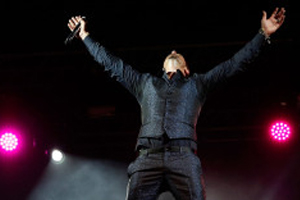
Robin Thicke performing on stage wearing sunglasses and a suit while holding a microphone stand.

Radio Worthiness Then vs Now

Marvin’s Era

It is also very interesting to realize what was radio worthy at the time. These is no real chorus, no ups and downs, just a great pocket, basically a jam, with fun vocal lines on top and a bunch of people partying non stop in the background.

Section Structure

The basic building block is 2 X 8 bar sections glued together. The first 8 bars stay on one chord and the second 8 bars provide the turnaround feel.

Human Performance

It's interesting to carefully listen to what the band is playing. Remember this was before the days of copy-paste and easy editing.

The Beautiful Imperfections

Notice how at 1.40 the A B A B format gets broken when someone kinda forgets to go to the B section but the vocals stay the course. Things get blurry for a while then we get into the 'bridge', which is the same pocket with slightly different vibes over it.

Live-Performance Nature

On the 'part 1' version check the section around 2.30 min, everyone is clearly looking at each other waiting for the sign to move on. Fun.

Late ‘Chorus’ That Isn’t a Chorus

The chorus-like section with the title lyric in it does not come until 3.20 min or so and it's really the outro.

Radio Edit Origins

Note how the song ends by a fade because it is actually just an excerpt of an 11+ min live version that was extracted for radio play purposes. (You can hear the beginning of the tenor solo at the very end of the fade). (The full version is available online if you are curious).

Why the Marvin Track Feels “Through-Composed”

Marvin Gaye performing live on stage, holding a microphone and wearing a light-colored suit.

Groove That Evolves Without Changing

The striking thing is that although the rhythm instruments play pretty much the same thing throughout, there is this feel that nothing really repeats and it's through composed.

Challenge for the Listener

One almost has to concentrate to be able to outline the section and make sense of what is going on. Quite wild isn't it?

Blurred Lines: Structure and Concept

Modern Pop Structure

In contrast, the Thicke track is quite well delineated.

It starts with Pharell's signature stuttered intro.

Then flow into a Verse Chorus Verse Chorus Bridge Chorus standard structure.

Harmonic Block

The harmonic structure is based on two 4 bar sections glued together. It never changes.

Vocals Define the Sections

The switch from verse to chorus is achieved by vocal content not by musical content. It's quite different from the spirit of the Marvin track where vocals and music move together and sometimes get out of sync.

Static Groove, Moving Vocals

Here, there is a basic 8 bar groove that never changes and the vocals flow on top.

Arrangement Devices

The listener's interest is kept up by drops, stops, little vocal interventions here and there and several performers sharing the lead.

Pharrell Williams sitting at a keyboard, wearing a white T-shirt with a red heart graphic and a black hat.

Instrumentation & Arrangement Parallels

Shared Vibes

The instrumentation and arrangement of the Thicke track is quite similar to that of the Gaye track.

Inspired Elements

The parts that really were inspired from the Gaye production are

  • The prominent presence of a cowbell,
  • The rhodes upbeat accented part,
  • The synth bass vibe.

The Rest? Modern Groove

The rest is standard groove music fare.

Well put together.

Spirit Comparison

It's interesting to go back and forth between the two to identify and to learn the difference in spirit between the two. On the Gaye track there is a bunch of players improvising for the whole track.

On the Thicke track there is a very well delineated and probably looped programmed parts that repeats endlessly.

Sign of the Times

Check it out.

Sign of the times.

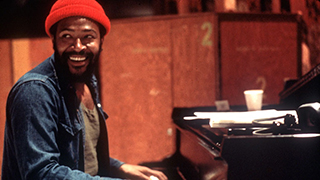
Marvin Gaye smiling while playing piano in the studio, wearing a red beanie and denim jacket.

Mix Comparison

Modern Fatness

Mix wise notice of much fatter the Thicke track sounds.

Mostly because of the bass drum.

Proximity of Elements

Also notice how much closer everything feels. There is distance between us and the Gaye track. The Thicke track is sitting on our lap.

Match Levels and Compare

Take a second to match levels between the two and compare. The best way is to import both tracks in a daw and to x-or solo between the two.

Bass & Dynamics

Spend time comparing the two bass drums and the two synth basses for a start. Modern recordings are much fatter. Aren't they?

Elegance vs Ribbon of Sound

The Thicke track has an elegant mix compared to most radio prone songs these days.

It's actually punchier and more dynamic than the Gaye track which is more of a ribbon of sound trickling from the speakers.

Mic Distance & Air

The air and natural compression that results from having microphones much further away from the sources than is the standard these days gives it a mellower tone. More impressionistic and less real sounding. It fits the song very well.

Marvin Gaye performing live with stage lights behind him.

Reverb Use: Then vs Now

Modern Targeted Reverb

It's also interesting to notice the different use of reverb. You can only hear the reverb on the vocals of the Thicke track.

Vintage Shared Space

While on the Marvin track everything has a tail except the drum set.

Function of Reverb

On the Thicke track the reverb is more a mixing tool to gel things together. On the Marvin track it's part of the texture of every sound.

The Limits of Vintage Gear

If it were dry the spirit would be completely different. They probably only had one or two EMT plate reverbs at Marvin's Room where the track was recorded, so everything shared the same virtual space.

Modern Unlimited Toolkit

Whomever mixed the Thicke track has access to endless plugins and was able to custom design a space for every instrument.

Sound vs Feel vs Memory

The Impression Trick

It is very interesting to pay attention to those details, especially in a situation when a song is so clearly inspired by another.

Does it SOUND the same?

or does it FEEL the same?

Or one level further : Does it feel like it sounds the same?

Robin Thicke performing live, singing into a microphone with bright stage lighting.

Memory Plays Tricks

In this case if you hear Blurred Lines after not hearing the Marvin track for a long time, you immediately think they are the same.

Then if you put them next to each other and start listening you get hit by how different they are. Isn't that amazing?

Critical Listening Exercise

It's a very good exercise to try and remember how a song sounds and then go listen to it right away on a reference system to compare impression and reality.

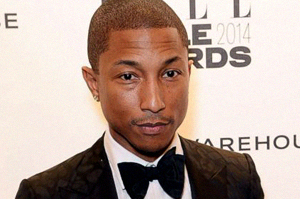
Williams sporting a tuxedo. Pharrell Williams wearing a formal tuxedo while performing on stage.

Why This Matters

Artists Want “That Classic Sound”

I have had many interesting discussions with artists who insisted that they wanted their record to sound exactly like a Beatles or a Pink Floyd record because 'those are the best sounding records of all times dude'.

Reality Check

Only to change their mind after we went back and actually listened to the those songs with a critical ear.

Fascinating moments.

So, what can we learn from this exercise?

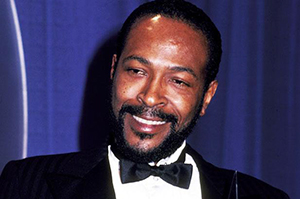
Gaye sporting a tuxedo : Marvin Gaye wearing a tuxedo and smiling during a live performance

Perception vs Reality

I feel we can learn that reality and perception are two very different things. Both are very valid tools in the process of making music.

Critical Listening = Truth

But only focused critical listening affords a true picture of the reality.

Why It Matters

Reality is a useful asset to have when things get critical, whereas your perception is a function of your emotional mind which lies to you all the time, just like your ex-girlfirend/boyfriend. (Which is not to say that they were not fun to be around).

Same Principles

The same principles apply to eq, compressors, instruments and red wine.

Final Thoughts

Let's reflect on this until next time.

Cheers,
Fab Dupont

written-by

Pianist and Resident Engineer of Fuseroom Recording Studio in Berlin, Hollywood's Musicians Institute Scholarship winner and Outstanding Student Award 2005, ee's worked in productions for Italian pop stars like Anna Oxa, Marco Masini and RAF, Stefano 'Cocco' Cantini and Riccardo Galardini, side by side with world-class musicians and mentors like Roger Burn and since 2013 is part of the team at pureMix.net. Alberto has worked with David White, Niels Kurvin, Jenny Wu, Apple and Apple Music, Microsoft, Etihad Airways, Qatar Airways, Virgin Airlines, Cane, Morgan Heritage, Riot Games, Dangerous Music, Focal, Universal Audio and more.