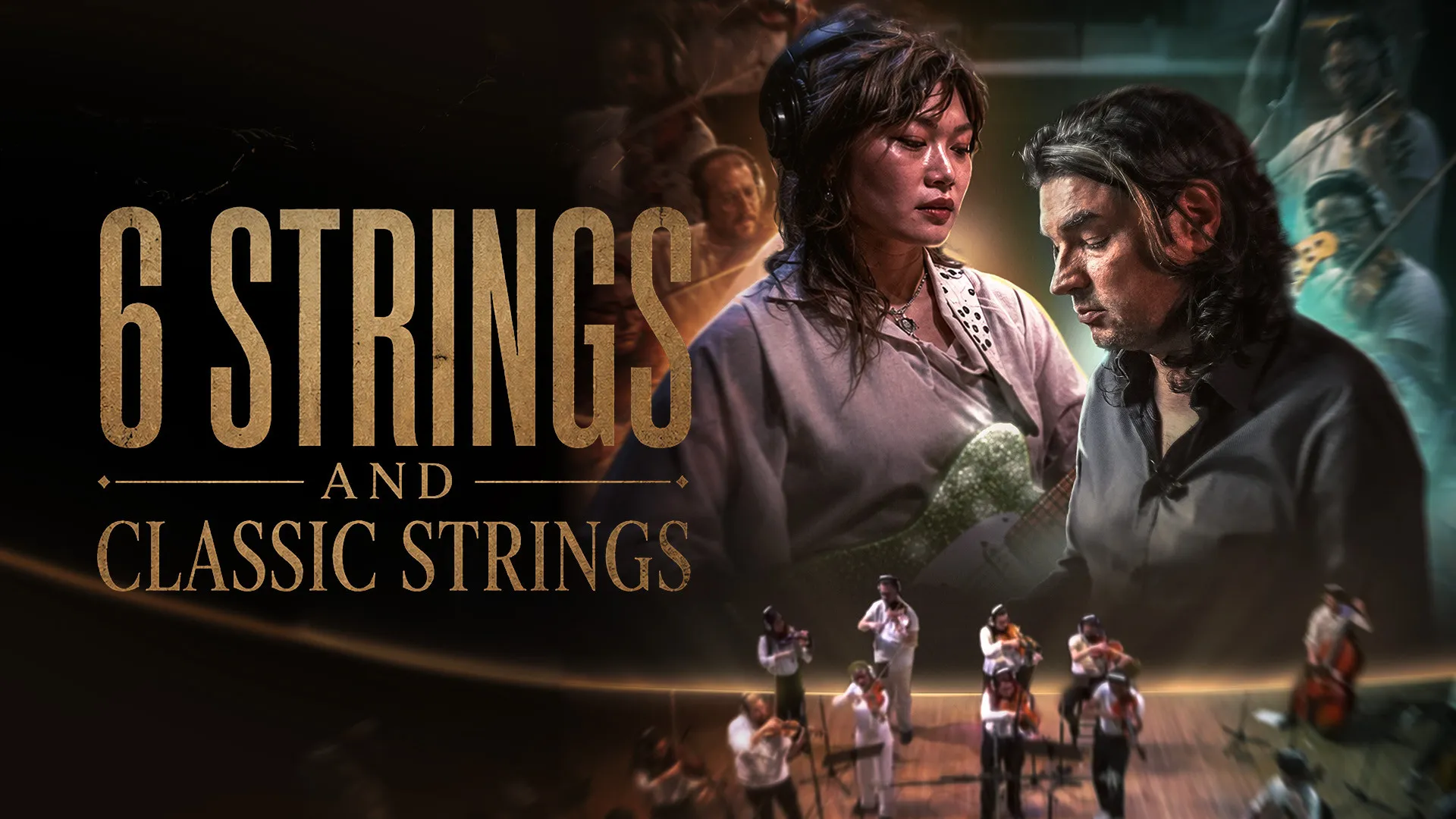







The overdubs start and the real problem surfaces within minutes. The piece opens free-form, there is no click anywhere in the session, and asking Yvette to chase a scratch that was never on a grid kills the thing that makes her playing worth recording. "Instead of focusing on feel, I'm focusing on following."
So Fab runs the fix backwards from how overdubs usually go. Rather than making her follow the orchestra, he moves the orchestra to her. The opening is pizzicato, which means individual string notes can be nudged into place around her phrasing, sparingly, because eighteen open mics means every nudge moves the ambience too. And when nudging is not enough, he goes looking for silence in a session that has none: "there's no silence, there's 18 microphones, it's the loudest thing in the world." Finding a patch of room tone with nobody playing and nobody tapping a foot is what lets him insert time and re-pace the entire orchestra around her performance.
Around that, building layers rather than takes. A sustained shimmer to fade in under the intro, a pitch-shifted sparkle pass, and a feedback layer deliberately overplayed once so the second, sparser version has something to be measured against. Choosing organic over a distortion layer on the chords. Letting a note ring to hide a tone change. And the delay problem, where her rhythmic delay meets an orchestra that breathes: track the first two iterations, reset the delay, take the third. Plus the line that describes the whole day. "I feel like I'm writing a score to a waveform."