

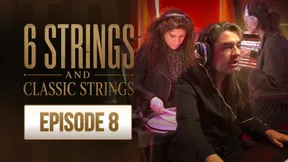



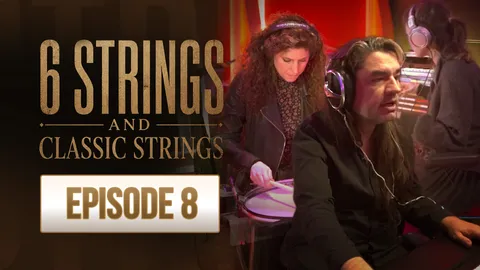













The orchestra arrives and the paper plan meets eighteen human beings. Fab works the room section by section, listening to long tones, moving stands, opening spacing, and asking the same question over and over: is this mic in your way? He picks the M49 over the 103 on bass and says why. For bowed instruments in this room, that is the one. And microphones get added as he hears what is missing: a second Clarion for a player who has solos, extra cellos patched into 7 and 8 on the 4-710 once he hears them vanish under the violins.
Then he tells the room what he is actually doing, in a line that is the whole job in one sentence. It already sounds great in here. The point is to make sure it sounds the same on the other side of the electronics, "which is not a given." Cue the stringpella, a full run with no guitar at all, while Fab listens through the console and then walks back into the room to compare. Peter rehearses over the top of it, and you get the conductor's vocabulary alongside the engineer's: do not lean on the first beat, go to the third, upper half, now the frog, save the diminuendo for the second half of the bar. Chamber music. Also the spacing negotiation, where "six feet apart" gets retired and the first and second violin stands finally get room to breathe.
And then the problem that reshapes the rest of the day. Yvette needs more guitar in the cans to lock her delay, but the sound of her boot hitting the pedalboard switches is printing into eighteen open string mics, and it cannot be removed. The fix gets worked out live, in front of everyone: track the guitar clean, with barely any delay, and rebuild every effect the next day. "I did not anticipate that whatsoever."