

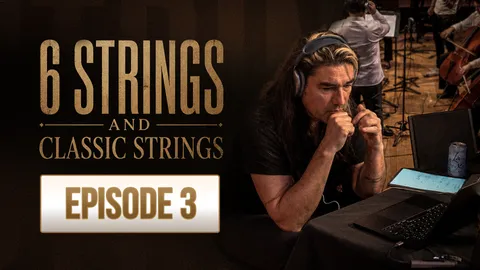
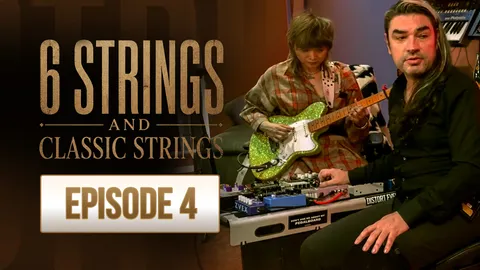

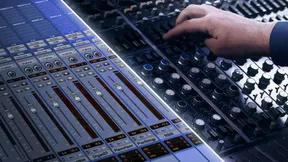


Comping, and the honest arithmetic of it. The session says 45 takes. Fab reckons it is really about three, because the counter has no idea the difference between a take and a punch. Bad notes get swapped for the same note from elsewhere, a slide gets replaced with a jump because a jump is what she actually wanted, and the ending gets its build.
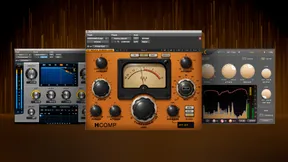
That build is the set piece. Yvette wants the last section to grow into "a wall of bees," so Saturn goes on with the drive automated rather than the mix, level compensated so the growth reads as intensity instead of volume, then rebalanced in parallel so the attack survives. Fab flags the risk out loud, that they might be losing some of the soul of the record, and keeps a path back. An octaver goes underneath for girth.
Then housekeeping that is quietly the point of the whole series. All the percussion buses to a drum bus with tape, and then Ocean Way, so the drums can be placed in a room the way the strings already are. A rough gets printed, not because it is a mix but because you cannot review what you cannot hear. And the session gets handed over: 24 gigabytes, with a walkthrough of how Luna versioning works, no save button, just snapshots you can return to in six months.
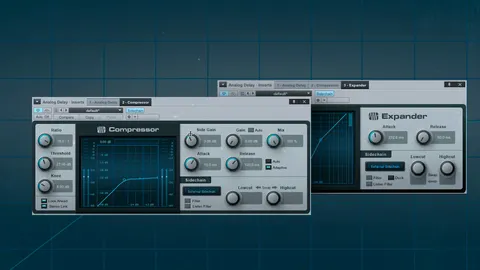
It closes on two things worth staying for. Fab explains why this piece cannot be mixed like a classical record: the dynamic range that works in a hall puts the quiet passages at minus 25 in a car, so the job becomes corseting it to survive next to everything else on Spotify. "What we did today is mixing, but it's more like tone finding. The rest is balance." And Yvette explains where the piece came from. Commissioned with a month before the festival, no notation software, so she played every instrument herself, pitch shifted a violin down because she did not own a cello, wrote one movement a week for three weeks, and spent the last week learning to play it.