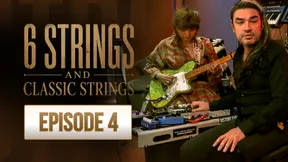
Universal Audio set the brief, and it was close to a dare: build a studio from scratch inside a performance space using Apollo interfaces, then record a string orchestra and an electric guitar in it. Not in a control room. Not over weeks. In a room built for audiences, in a day.
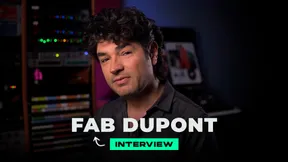
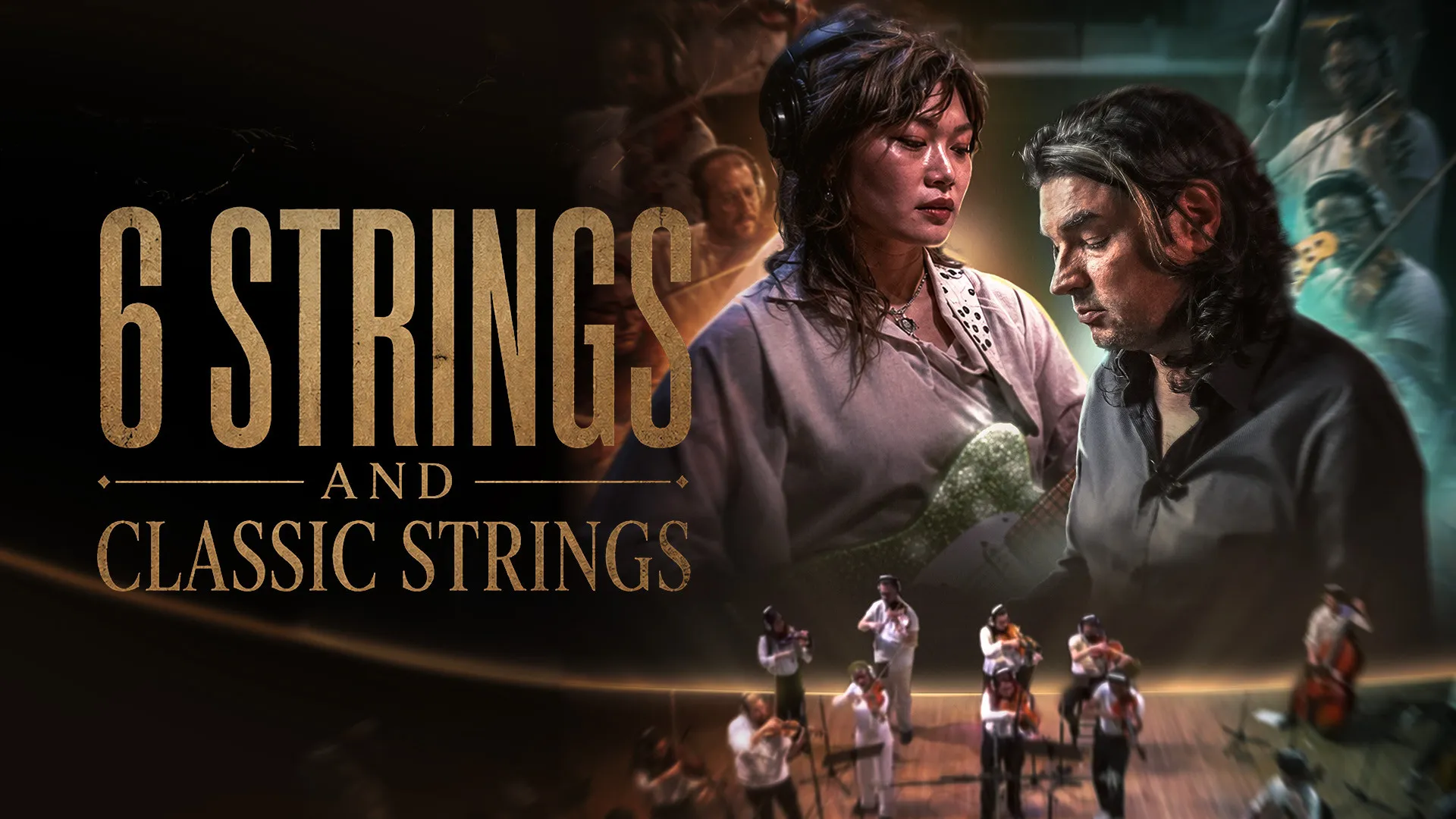
Fab Dupont took it literally. This series runs from gear coming out of the car to the finished mix, following eighteen string players and Yvette Young through a Brooklyn venue with traffic on all four sides, and then through three more sessions dealing with the consequences.
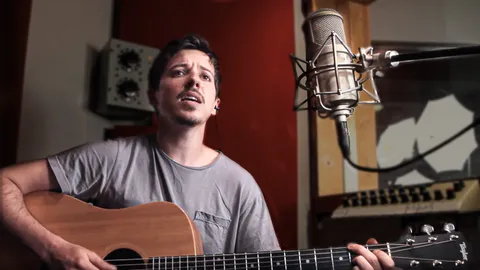
The piece is 3 Pieces for Strings and Guitar, Yvette's first work written for strings. Conductor Peter Askim commissioned it for the Next Festival of Emerging Artists after years as a fan, on the theory that a guitarist who hears that much detail in her own playing would do something worth hearing with eighteen voices. She wrote it in a month, with no notation software, playing every instrument in herself and pitch shifting a violin down because she did not own a cello. One movement a week for three weeks, then a week to learn to play it.
Everything that follows is shaped by one decision made before a note was recorded. Fab went to hear the orchestra play the night before the session, listened to what they did with the rubato, and dropped the click. It could not survive being gridded, and stopping to count off is, in his words, the opposite of music. That choice buys the record its life. It also sends the invoice to every session after it.
So you watch the invoice arrive. The orchestra goes on the floor rather than the stage, for the reverb and for the camera angles. A three omni array goes up with a tape measure. Schoeps sit across the sections, an M49 on each bass the way Al Schmitt did it, and more microphones get added mid session once the cellos disappear under the violins. Eighteen inputs get mapped across three Apollos and a 4-710, numbered so the routing survives a fast day. Then the problem nobody anticipated: the sound of a boot hitting a pedalboard switch, printing into eighteen open string mics, unremovable, forcing the entire guitar approach to be rebuilt on the spot.
At Flux the next day, the guitar goes back on, and the usual logic runs backwards. Rather than making Yvette chase a scratch that was never on a grid, Fab moves the orchestra to her, nudging pizzicato notes around her phrasing and hunting for a patch of genuine silence in a session recorded with eighteen open microphones so the whole ensemble can be re-paced around one performance. Weeks later, a percussion session turns a 1970s rock kit bass drum into orchestral percussion, because a 36 inch concert drum was never coming through the door. Then the edit, where the strings become the immovable control that everything else must move to meet, and where tracking without a click reveals its true price: what Fab calls negotiated time, with no right answer, only the happy average.
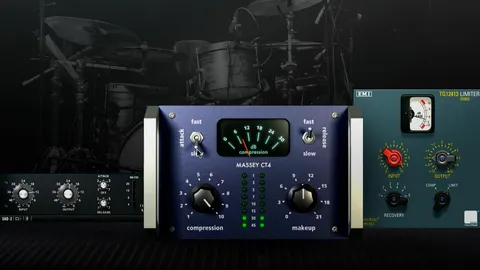
The series ends with the mix, in two parts. Fab deconstructs the finished record in Universal Audio Luna, working through the problem that governs every fader: a piece with orchestral dynamic range has to survive being played in a car and sitting next to everything else on streaming, without the quiet passages vanishing or the loud ones being crushed. Then he and Yvette answer questions from a live audience.
Along the way there is a conversation that has nothing to do with any of the gear. Yvette asks for something small, then admits she felt afraid asking, because she has been told at other studios that details like that do not matter. What follows is the clearest twenty minutes on ego, taste, deference and whose record it actually is that you are likely to hear on camera. If you take one thing from this series, it may well be that.
Featuring Yvette Young, guitar and composition. Peter Askim, conductor, Next Festival of Emerging Artists. Recorded and mixed by Fab Dupont. Made in collaboration with Universal Audio.
Recorded on UA Apollo x8p, Apollo x8 and Apollo x4 with a UA 4-710. Mixed in UA Luna.